0207 870 1221

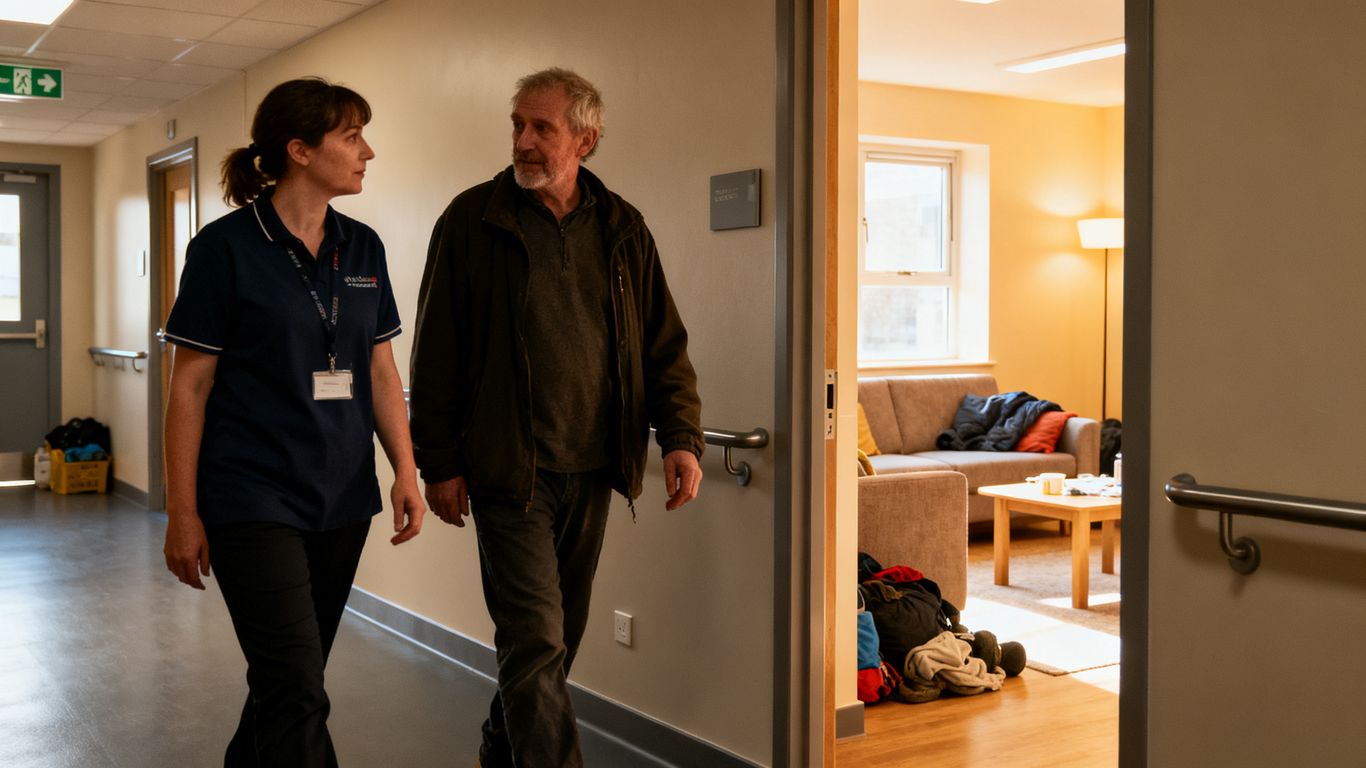
UK homeless hostels support people whose experiences of homelessness, abuse and disrupted services may shape how they respond to planned contact. A trauma-informed approach recognises that missed keywork may reflect fear, poor health, neurodiversity, practical barriers or a need for greater control, rather than a lack of motivation. Staff should remain curious and respectful while checking whether a change in attendance signals increased vulnerability or immediate danger. By combining relationship-based observation with clear safeguarding procedures, hostel teams can respond proportionately, preserve residents’ dignity and create safer opportunities for engagement.
Understanding when missed keywork may indicate a safeguarding risk
Missing one keywork appointment does not, by itself, prove that a resident is unsafe. Keywork is one part of a wider relationship, and we need to understand what has changed before deciding what action is proportionate. The concern grows when an absence sits alongside other signs of distress, vulnerability or loss of contact.
The difference between non-engagement and immediate danger
A resident may miss keywork because they are tired, working, attending an appointment or simply not ready to talk. That is different from a situation where there is reason to believe they may be injured, threatened, unable to care for themselves or at immediate risk from another person. We should keep those possibilities separate while still taking the missed contact seriously.
Our first response is usually to establish whether the resident is safe, not to treat attendance as a test of their character. A calm check through the agreed contact route can clarify whether this was an ordinary missed appointment or part of a more urgent change.
Why missed appointments should be viewed in context
Context includes the resident’s usual pattern, current support plan, health, relationships and recent events. Someone who has always preferred short conversations may not be showing the same level of concern as someone who normally attends reliably and then disappears without explanation.
We should also consider practical barriers such as transport, phone access, literacy, pain, caring responsibilities and changes in medication. A missed session becomes more meaningful when it is read alongside the whole picture rather than counted in isolation.
How trauma, mental ill health and neurodiversity can affect attendance
Trauma can make planned conversations feel exposing, particularly when the resident expects difficult questions or has experienced services as controlling. Depression, psychosis, anxiety, cognitive impairment and substance use can affect memory, motivation, timekeeping and the ability to respond to messages. Neurodivergent residents may need clearer information, more preparation or a different sensory environment.
This does not mean that every absence has a clinical explanation. It means we should ask what would make engagement easier and avoid turning a support need into an allegation of non-cooperation.
When a pattern of absence becomes more concerning
Repeated missed appointments deserve a review, especially if contact attempts are unanswered and the resident’s routines are changing. The pattern may involve missed meals, uncollected medication, unpaid charges, unexplained visitors, reduced self-care or increasing conflict. Patterns matter more than isolated events because they can show deterioration that is otherwise easy to overlook.
We can record the frequency and circumstances without labelling the resident. The purpose is to identify a change early and agree a safe, respectful response.
Avoiding assumptions about motivation or “non-compliance”
Words such as “non-compliant” can close down curiosity. They may conceal fear, coercion, shame, communication difficulty or a reasonable disagreement about the support being offered. We should describe what happened and ask what the resident wants to change.
Where money, belongings or dependence on another resident are involved, staff may find this financial exploitation guidance useful when considering whether apparently shared arrangements have become controlling. The guidance does not replace local safeguarding procedures, but it encourages careful listening and proportionate action.
Recognising resident disengagement warning signs
Resident disengagement warning signs are often quiet at first. A person may still say hello, attend a meal or appear settled while gradually losing contact with staff and ordinary routines. We should look for changes from that person’s baseline, not compare them with an imagined ideal resident.
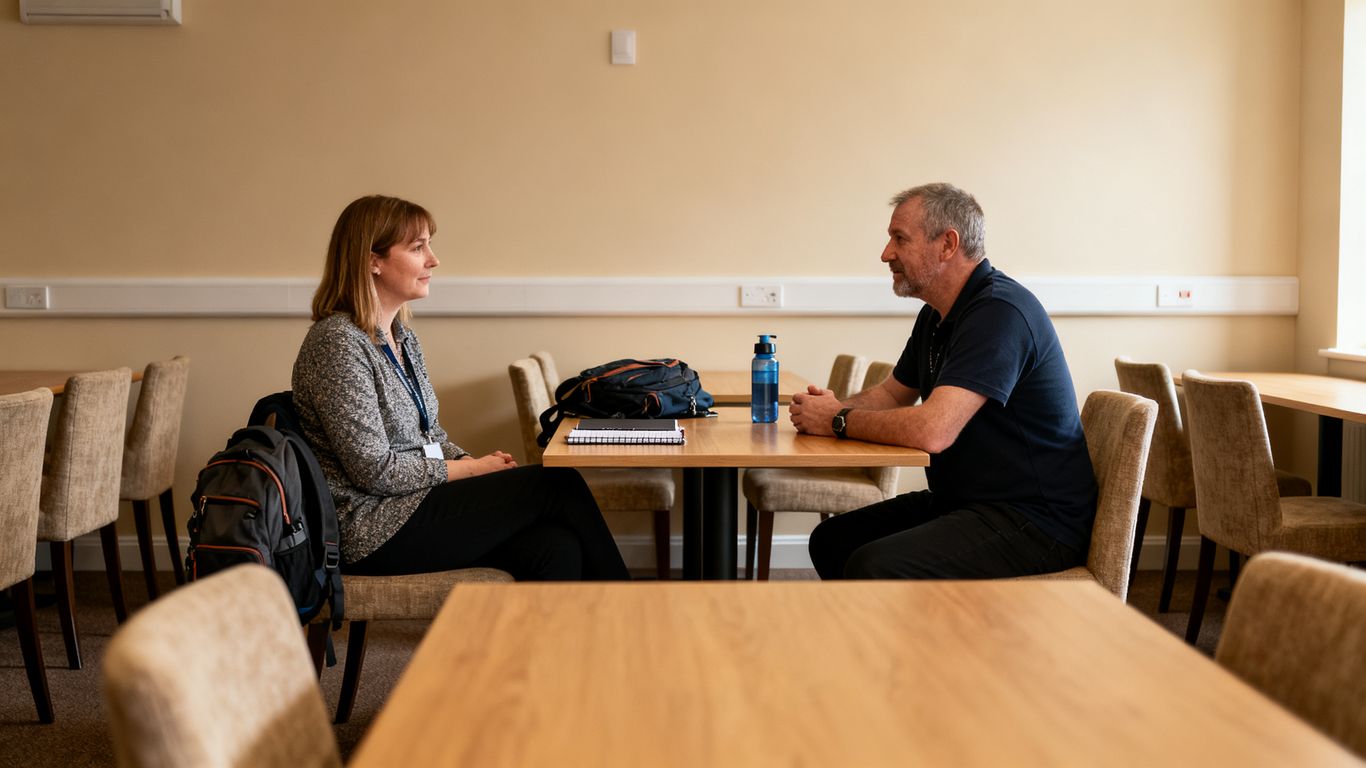
The following signs are not proof of abuse or neglect. They are prompts to notice, ask, record and, where needed, seek advice.
Sudden changes in communication, presentation or behaviour
A resident who normally answers messages may stop responding, become unusually guarded or communicate only through another person. Changes in dress, hygiene, sleep, speech, mood or alertness may also matter, particularly when they happen quickly. We should avoid diagnosing from appearance and focus on what we have actually observed.
A change in behaviour may reflect grief, illness, medication, conflict or a new risk outside the hostel. Gentle questions can help us distinguish a preference for privacy from a sign that someone is frightened or being monitored.
Withdrawal from staff, peers and routine activities
Withdrawal may look like staying in a room, avoiding communal areas, missing meals or no longer joining activities that previously mattered to the resident. It can also appear as a loss of conversation with peers or reluctance to leave the building. These changes can indicate low mood, conflict, exploitation or simply a need for more space.
We should not assume that participation equals wellbeing. A wider discussion of quiet disengagement in resident communities makes a similar point: attendance alone may not show whether someone feels connected or safe. In a hostel, we need to combine participation with relationship-based observation.
Unexplained injuries, deterioration or loss of essential items
Bruising, burns, untreated wounds, sudden weight change, poor hygiene or a decline in mobility may require attention. So may missing identification, bank cards, medication, phone or clothing. We should ask open questions and offer practical help without demanding an explanation before the resident feels ready.
The response depends on urgency. A serious injury, immediate medical need or credible account of violence requires faster action than a missing item with an ordinary explanation, but both should be recorded accurately.
Signs of coercion, exploitation, abuse or controlling relationships
Warning signs can include a person being accompanied everywhere, appearing afraid to speak alone, handing over money or possessions, receiving unexplained visitors, or changing their account when someone enters the room. A partner, friend, relative or another resident may be exerting control. Financial pressure can be especially difficult to identify when it is presented as a loan or shared expense.
We should create safe opportunities for private conversation and never confront a suspected perpetrator in a way that could increase danger. The resident’s safety, wishes and communication needs should guide the next step.
Missing-person concerns and unexplained overnight absences
An overnight absence is not automatically a safeguarding incident. Some residents have work, family or social commitments and may have agreed arrangements for notifying staff. Concern rises when the absence is unusual, prolonged, accompanied by unanswered calls, or linked to known risks such as exploitation, self-harm, violence or poor health.
We should follow the hostel’s missing-person procedure, check the information available to us and escalate promptly if the circumstances suggest danger. We must not delay action simply because the resident is an adult or has previously left without difficulty.
Assessing the level and urgency of concern
Good safeguarding decisions require more than a checklist. We need to ask what is known, what is uncertain, who may be at risk and what action could reduce that risk without creating another one. A proportionate assessment is both cautious and respectful.
The seriousness of a missed keywork session may change during the day. New information, a failed welfare check or a disclosure can move a situation from routine follow-up to urgent escalation.
Questions to ask when a resident misses keywork
We can begin with straightforward questions: Is this unusual for the resident? When were they last seen or heard from? Have there been recent changes in mood, health, relationships or routine? Are there known risks, appointments, medications or restrictions that make the absence more significant?
It is useful to ask colleagues whether they have noticed anything different, while avoiding gossip or speculation. We should also check the support plan and previous agreed contact preferences before choosing how to respond.
Identifying immediate risks to life, health or safety
Immediate risk may involve suspected violence, serious injury, suicidal intent, overdose, fire, acute medical symptoms or a person who is missing in circumstances suggesting danger. If the resident is found unresponsive or seriously unwell, emergency services take priority over routine keywork processes.
We should communicate the essential facts clearly: who is at risk, what has been observed, when contact was lost and what action has already been taken. Uncertainty is not a reason to do nothing when the possible consequences are severe.
Considering self-neglect, substance use and mental health crisis
Self-neglect can involve unsafe living conditions, untreated illness, not eating or drinking, unmanaged medication or inability to meet basic needs. Substance use may increase vulnerability, but it should not be treated as evidence that a person is undeserving of support. Mental health crisis can present as agitation, confusion, withdrawal, unusual beliefs or sudden loss of ordinary functioning.
We should consider capacity, immediate medical needs and the resident’s own account. Support may involve clinical services, substance misuse teams, emergency help or a safeguarding referral, depending on the facts.
Understanding risks linked to domestic abuse, exploitation and hate crime
A resident may face threats from a partner, family member, acquaintance, creditor or group. Homelessness can increase dependence on people who offer accommodation, money, substances or transport in exchange for control. Hate crime may be verbal, physical, financial or targeted at a person’s identity, and fear may make disclosure difficult.
We should offer private, non-judgemental conversation and avoid asking questions in front of anyone who may be involved. Specialist advice can help us plan contact safely rather than making a well-intended approach that increases exposure.
When the situation requires an urgent welfare check
An urgent welfare check may be appropriate when there is credible concern about immediate harm, a serious unexplained absence, a failed attempt to reach someone known to be at high risk, or signs of medical or mental health crisis. We should follow local policy and involve a manager, safeguarding lead or emergency service as required.
A welfare check should be planned safely. Staff should not enter a room alone when there may be violence, weapons or hazardous substances, and should not promise confidentiality that cannot be maintained.
Responding supportively after missed keywork
Once immediate danger has been considered, our approach should help restore trust rather than punish absence. The resident may already feel watched, judged or overwhelmed. A short, respectful message can be more effective than a series of increasingly demanding calls.

We should keep the purpose of contact clear: to check safety, understand barriers and offer a next step. The resident remains a person with choices, not a task that has become overdue.
Making safe and proportionate contact
Use the method and level of contact agreed with the resident wherever possible. A neutral message might say that we noticed the appointment was missed, ask whether they are safe and offer options for rearranging. Avoid including sensitive details in a voicemail or message that someone else may see.
The number of attempts should reflect the level of concern. Repeated contact can feel intrusive in a low-risk situation, while limited contact may be unsafe when there are strong indicators of immediate harm.
Offering flexible appointments and alternative communication
Flexibility may mean meeting for ten minutes, changing the time, speaking while walking, using a quiet room or agreeing a telephone or written check-in. Some residents communicate more easily by text, email, visual prompts or with an advocate present. We should ask rather than prescribe.
The arrangement needs to remain safe and workable for both resident and staff. Clear expectations about cancellations and alternative contact can reduce shame when plans change.
Using psychologically informed and trauma-aware approaches
Trauma-aware practice recognises that authority, closed rooms, personal questions and sudden changes can feel threatening. We can explain what will happen, seek permission before moving to sensitive topics and offer choices wherever possible. Calm tone and consistency matter more than perfect wording.
We should avoid forcing disclosure to satisfy a form or timetable. Building enough safety for the resident to speak may take several contacts, while urgent risk still needs to be acted on without waiting for a complete story.
Involving trusted people without undermining the resident’s choice
A trusted person may help the resident attend, interpret information or feel safer. Before involving anyone, we should ask who the resident trusts, what they are comfortable sharing and whether that person could increase risk. Family involvement must not be assumed to be helpful.
Consent should be specific and revisited when circumstances change. If information must be shared without consent because of serious risk, we should explain this where it is safe and practicable to do so.
Responding when the resident declines support
Adults can refuse keywork and may choose not to explain why. We should acknowledge the decision, leave a clear route back to support and continue proportionate observation where legitimate risks remain. A refusal does not erase a safeguarding concern, but neither does it automatically justify intrusive action.
We can agree what the resident would like us to do if they miss future appointments or become difficult to reach. This preserves autonomy while making the plan safer for everyone.
Deciding when to escalate a safeguarding concern
Escalation is not a failure of the keywork relationship. It is a way of obtaining advice or protection when the concern exceeds our role, knowledge or safe capacity. We should act on reasonable concern rather than waiting for certainty or a perfect disclosure.
Local policy will set out reporting routes, but professional judgement still matters. We should be able to explain why we escalated, what we hoped would happen and how we considered the resident’s wishes.
The role of consent, capacity and proportionality
Consent is central, but it is not the only consideration. We should consider whether the resident understands the decision, whether they can weigh relevant information, whether there is coercion and whether the proposed action is necessary and proportionate. Capacity is decision-specific and should not be inferred from homelessness, diagnosis or substance use alone.
Where the resident has capacity and there is no overriding reason to share, their wishes generally guide the response. We should still offer information, advocacy and time to reconsider.
Situations that may justify sharing information without consent
Information sharing without consent may be justified where there is a serious risk of harm, a risk to another person, a safeguarding duty, a missing-person concern or a legal requirement. The decision should be limited to what is relevant and necessary. We should record the reason for sharing and any advice received.
If there is immediate danger, emergency services may need information before consent can be obtained. We should explain the decision afterwards when doing so will not increase risk.
Escalating concerns to a manager or safeguarding lead
Staff should tell a manager or safeguarding lead when a pattern is emerging, the resident is at high risk, another person may be causing harm, or the appropriate response is unclear. Escalation should happen promptly, not simply at the next scheduled supervision session.
Managers can help test assumptions, identify gaps in information and coordinate a consistent response. They should also ensure staff are supported after difficult incidents.
Contacting adult social care, emergency services or specialist agencies
Adult social care may be appropriate where care and support needs, self-neglect or abuse and neglect require statutory consideration. Emergency services are needed for immediate threats to life, serious injury, fire or violence. Specialist domestic abuse, exploitation, mental health, substance misuse or hate crime services may provide safety planning and expert advice.
We should use current local contact routes and give agencies a concise account of facts, risks and the resident’s wishes. A referral should not be used as a substitute for immediate action where someone is in danger.
Considering local safeguarding procedures across the UK
Safeguarding arrangements differ across England, Wales, Scotland and Northern Ireland, including terminology, thresholds and referral routes. Our hostel should make sure staff know which local authority, health board, trust or council process applies to the service. National principles are useful, but local procedures govern operational decisions.
We should check current guidance rather than rely on memory. Cross-border or move-on cases may need coordination between areas, with careful attention to continuity and lawful information sharing.
Recording, information sharing and professional accountability
A clear record protects the resident and helps colleagues respond consistently across shifts. It should show what happened, what we considered, what the resident said and why we took a particular action. Records are not only administrative evidence; they shape the next professional decision.
Good recording also prevents a pattern from being lost among separate entries. We should write promptly, securely and in line with organisational policy.
What to document about missed appointments and contact attempts
Record the date and time of the missed appointment, the agreed purpose, contact attempts, method used, response received and any welfare observations. Include who was consulted, what advice was given and whether another appointment was arranged. If there was no response, say so plainly.
Avoid filling gaps with guesses. “No answer at the resident’s door at 14:10” is more useful than “resident was avoiding staff”.
Separating facts, observations and professional judgements
Facts are things that happened or were reported, such as a missed meeting or a message saying “do not contact me”. Observations describe what staff saw or heard. Professional judgement explains the risk considered and the reason for action. Keeping these distinct makes the record easier to review.
We should identify information from another person as information reported to us, not as established truth. This protects fairness while ensuring concerns are not ignored.
Recording the resident’s own views and preferred outcomes
The resident’s words, wishes and preferred outcomes should be included wherever possible. They may want a different worker, a private meeting, help contacting a service or no further discussion at that time. Recording these preferences supports meaningful choice.
We should also record disagreement. A resident’s view may differ from our risk assessment, and that difference is part of the safeguarding picture rather than an inconvenience to remove.
Sharing information lawfully and on a need-to-know basis
Share only what the recipient needs to understand and respond to the concern. Check identity, use approved systems and follow data protection and safeguarding policy. Information should not be circulated widely because a case is interesting or difficult.
A proportionate approach protects privacy while allowing action. Where we are unsure, we should seek advice from a manager, safeguarding lead or information governance colleague and record that advice.
Reviewing risk assessments and support plans
A missed appointment may reveal that a risk assessment or support plan no longer reflects the resident’s circumstances. Review contact preferences, known triggers, emergency contacts, medication information, missing-person arrangements and agreed responses. Involve the resident in changes wherever safe and possible.
Plans should be living documents, not forms completed once at move-in. A review after an incident can make future responses quicker, clearer and less intrusive.
Preventing missed keywork from becoming a safeguarding gap
Prevention begins before the first missed appointment. When residents understand what keywork is for and how staff will respond to absence, contact feels less threatening. We can create arrangements that are realistic, accessible and flexible without losing accountability.
A supportive hostel also notices change through ordinary relationships, not only formal appointments. Consistent teamwork helps turn those observations into safe action.
Agreeing realistic engagement expectations at move-in
At move-in, we should explain the purpose and frequency of keywork, how to rearrange sessions and what may happen if staff cannot establish contact. Ask the resident which methods, times and locations work for them. Expectations should allow for health, work, appointments and fluctuating capacity.
We should also explain the limits of confidentiality in plain language. Honest expectations reduce the chance that safeguarding action will feel like an unexpected breach of trust.
Building relationships before problems arise
Trust is built through ordinary, reliable interactions: keeping promises, greeting residents respectfully and following through on small requests. Staff who know a resident’s usual presentation are better placed to notice a meaningful change. Relationship-building is safeguarding work, even when no crisis is visible.
We should avoid making contact only when something has gone wrong. A resident is more likely to respond to a welfare check from someone who has already shown patience and respect.
Designing accessible and flexible keywork arrangements
Offer reasonable adjustments and different ways to take part. Some residents may need reminders, an interpreter, extra processing time, a low-stimulation room or a shorter session. Others may engage better around a practical task than across a desk.
Flexibility should be planned rather than improvised. Recording what works helps the whole team provide continuity while avoiding repeated questions and preventable misunderstandings.
Using multi-agency working and consistent handovers
Residents may be supported by housing, health, social care, probation, outreach, advocacy and specialist services. With appropriate consent or another lawful basis, coordinated information can prevent missed warning signs. Handovers should identify current risks, agreed actions and changes in contact preferences.
A handover should be concise and purposeful, not a long narrative that hides the key issue. Where a concern is unresolved, the next worker needs to know who is responsible for follow-up and by when.
Monitoring patterns while preserving dignity and independence
Monitoring should help us notice risk, not turn residents into compliance scores. We can review missed sessions, contact attempts and changes in routine alongside the resident’s explanation and goals. The aim is to offer the least intrusive response that keeps people safe.
Regular team reviews can identify recurring barriers and improve the service. They should not become public discussions about an individual or a reason to remove choice without evidence.
Key Takeaway for Hostel Managers
-
Set clear, realistic keywork expectations and agree preferred contact methods at move-in.
-
Train staff to recognise changes from a resident’s baseline and apply trauma-informed, non-judgemental communication.
-
Use consistent recording and handovers to identify patterns, barriers and emerging safeguarding risks.
-
Make escalation routes and local procedures clear, including when to contact emergency or specialist services.
-
Review incidents and support plans with residents where possible, keeping responses proportionate and dignity-preserving.
Conclusion
Missing keywork becomes a safeguarding concern when it forms part of a credible picture of danger, deterioration, coercion or unexplained loss of contact. By staying curious, recording carefully, responding proportionately and escalating when necessary, we can protect residents without confusing support with control.
Frequently Asked Questions
Is missing one keywork appointment a safeguarding concern?
Usually not on its own. We should consider the resident’s normal pattern, current risks and any other changes before deciding whether follow-up or escalation is needed.
How many missed appointments should trigger a welfare check?
There is no universal number. The urgency depends on the person’s known risks, the reason for the absence, failed contact attempts and any signs of immediate harm.
Can an adult resident refuse keywork?
Yes, an adult with capacity can generally refuse support. Staff should respect that choice while leaving a route back to help and responding appropriately to serious or immediate risks.
What are common resident disengagement warning signs?
They can include sudden silence, withdrawal from routines, unexplained injuries, deteriorating self-care, missing essential items, fearfulness, controlling visitors or an unusual absence.
When can information be shared without consent?
It may be shared where necessary and proportionate to prevent serious harm, protect another person, meet a safeguarding duty or respond to an emergency or legal requirement.
Should staff contact the police about every unexplained absence?
No. The response should follow local missing-person and safeguarding procedures and reflect the level of risk. Police or emergency services should be contacted promptly where circumstances suggest danger.
How can hostels reduce missed keywork?
They can agree realistic arrangements at move-in, build trusting relationships, offer accessible communication, use consistent handovers and review patterns without treating residents as though attendance is a measure of worth.