0207 870 1221


Understand why staff handovers matter for resident safety
A staff handover is the point at which responsibility passes from one shift to another. In a homeless hostel, that change can involve active safeguarding concerns, unsettled incidents, health worries and practical problems in the building. A clear handover gives the incoming team a usable picture of what is happening, rather than leaving them to piece it together under pressure. It also helps us provide support that feels steady and respectful.
How missed information can increase risk between shifts
Small omissions can have serious consequences. If the incoming worker does not know that a resident has become distressed, missed an important appointment or had a disagreement with someone else, they may respond without the context needed to keep everyone safe. A broken lock, an unresolved complaint or a promised welfare check can also disappear between shifts when nobody is clearly responsible.
The risk is not limited to dramatic incidents. Repeated minor gaps can weaken trust, cause residents to repeat difficult information and make staff decisions inconsistent. We can reduce that uncertainty by treating each handover as a safety task, not as an informal chat completed only when the building is quiet.
The safety-critical details that need to be shared
The content should be relevant to the next shift’s decisions. That usually includes changes in wellbeing or behaviour, incidents, immediate risks, safeguarding referrals, medication or health information that staff are authorised to hold, appointments, visitors, building hazards and outstanding actions. We should also state what has already been done, what still needs doing and who is expected to do it.
A useful test is to ask: what would the next worker need to know to make a safe decision in the first hour? The key information for hostel handovers includes significant events, support-plan updates, risks and appointments. We can use that principle without turning the handover into a lengthy account of every routine interaction.
How continuity supports trust and consistent support
Residents are more likely to engage when staff remember agreed boundaries, preferences and next steps. Continuity does not mean every worker responds in exactly the same way, but it does mean that agreed plans are not casually changed or forgotten. When we pass on what has been promised, residents receive a more dependable service and staff can build on existing relationships.
This is particularly valuable for people who have had to explain their circumstances repeatedly to different services. A thoughtful handover can prevent unnecessary repetition while still allowing the resident to correct or update information. It keeps the person, rather than the paperwork, at the centre of the conversation.
The particular challenges of hostel environments
Hostels are often busy, shared settings with changing levels of need. Staff may be managing competing demands from residents, visitors, contractors, emergency services and partner agencies at the same time. Night shifts can have fewer colleagues available, while agency or relief workers may not know the building or residents well.
We also need to account for trauma, mental ill health, substance use, conflict and sudden changes in presentation without making assumptions. A handover must therefore be concise enough to use in practice, but detailed enough to identify uncertainty and risk. The research on needs in homelessness services is a useful reminder that residents’ needs can be physical, relational and safety-related at once.
Create a consistent homeless hostel staff handover process
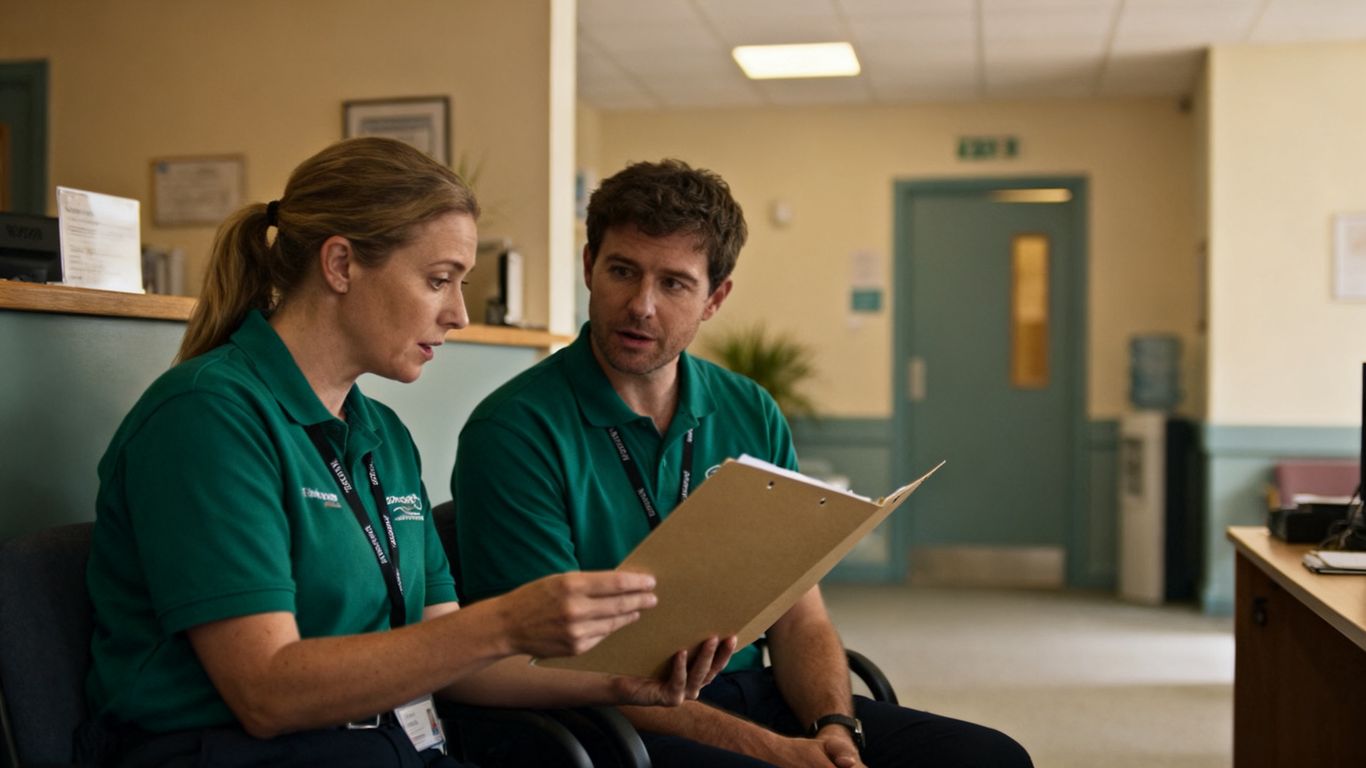
Consistency makes a handover easier to follow and easier to audit. We do not need a complicated system; we need an agreed minimum standard that works on every shift. The process should combine a short verbal exchange with accurate written records, so urgent matters are heard and important details remain available. A well-designed homeless hostel staff handover also makes accountability visible.
Agree what every handover must cover
Before choosing a form or software system, we should agree the information that must never be missed. The list should reflect the hostel’s residents, layout, staffing model and safeguarding arrangements. It should be reviewed with staff who work different shifts, because an item that seems obvious during the day may be crucial overnight.
A practical minimum might cover:
-
immediate safety or safeguarding concerns;
-
significant changes in a resident’s presentation or circumstances;
-
incidents, visitors, building defects and access issues;
-
appointments, planned contact and agreed support actions;
-
unfinished tasks, named owners and expected completion times.
That shared minimum gives staff a common starting point. It should not prevent workers from recording additional information when a resident’s circumstances require it.
Use a structured format for verbal and written updates
A simple structure reduces the chance that urgent information will be buried in a long narrative. We can organise the conversation by resident, by risk level or by action, provided everyone uses the same approach. Written notes should support the verbal discussion rather than become a substitute for speaking about a serious concern.
The process should allow the incoming worker to ask questions and confirm what they have understood. This matters when information is complex, when several residents are involved or when the outgoing worker is handing over to someone unfamiliar with the service. A short, repeatable format is more reliable than relying on memory or personal style.
Separate urgent actions from routine information
Urgent matters need to stand apart from routine updates. A developing safeguarding concern, serious incident, missing resident or immediate building hazard should be communicated directly and escalated through the relevant procedure, not left solely in a book for someone to discover later. Routine information can then be reviewed without competing with the immediate response.
We should be precise about what “urgent” means in our setting. Clear local definitions help staff make consistent decisions and avoid both underreaction and unnecessary alarm. The guidance on reducing hostel handover risk supports separating essential information, responsibilities and unresolved hazards so that they remain visible at shift change.
Set clear responsibilities and deadlines for follow-up
Every unfinished action should have an owner and a realistic deadline. “Team to follow up” is rarely enough; we should identify the role or person responsible, the next step and what should happen if contact cannot be made. The incoming worker can then acknowledge the action rather than quietly assuming someone else will deal with it.
Where an action has been passed to another service, the record should say when contact was attempted and what response is awaited. This creates a useful trail without blaming the worker who made the original request. It also lets managers spot recurring delays and remove barriers in the process.
Share information about immediate risks and safeguarding concerns
Safety information should be factual, timely and proportionate. We need to pass on what we observed, what the resident said, what action was taken and what remains uncertain. A handover does not replace safeguarding policy, emergency procedures or professional judgement. It is the bridge that helps the next shift act on those procedures without avoidable delay.
Recording changes in behaviour, wellbeing or presentation
A change from a resident’s usual presentation may be significant, particularly when it is sudden or accompanied by withdrawal, confusion, unexplained injury or loss of contact. We should describe observable facts rather than labels: for example, when the change occurred, what was seen or heard, and whether the resident accepted support. This gives colleagues something they can assess rather than an untested conclusion.
Missed keywork should also be recorded with care. The safeguarding implications of missed keywork include considering distress, vulnerability and loss of contact rather than treating non-attendance automatically as disengagement. That approach helps us identify when a supportive check-in is appropriate and when an urgent welfare response may be needed.
Escalating safeguarding concerns without delay
If information suggests abuse, exploitation, neglect or immediate danger, we should follow the hostel’s safeguarding pathway at once. The handover record can show that a concern was raised, who was informed and what further action is required, but it should not be used to postpone an urgent referral or emergency response.
Staff need to know who the safeguarding lead is, how to contact them out of hours and what to do when they cannot be reached. Good handovers make these routes familiar before a crisis occurs. They also record decisions and rationale clearly enough for the next worker to understand the current position.
Managing risks linked to violence, self-harm or substance use
Information about violence, self-harm or substance use should focus on current risk and agreed actions. We can record triggers, warning signs, access concerns, de-escalation approaches and any relevant safety plan, while avoiding language that turns a person into a risk category. Staff should distinguish between a historic concern and a current change that requires a different response.
Where a resident is at immediate risk, the correct emergency or clinical route takes priority. The handover should then explain what has happened, which professionals or managers have been contacted and what the next shift should monitor. This prevents staff from repeating unsafe steps or assuming that another service has already acted.
Passing on information about visitors, incidents and missing residents
Visitors, access arrangements and incidents can affect both individual residents and the wider building. We should record relevant names or descriptions, times, permissions, restrictions and actions taken in line with policy. If someone is missing, staff should follow the service’s welfare and safeguarding procedure, including recording the last known information and any risk indicators.
Building safety also belongs in this conversation. A damaged door, faulty alarm or unresolved conflict can alter the risk picture for everyone. The night security concierge role illustrates how monitoring, patrols and incident response may sit alongside resident-facing support; whichever roles exist locally, the handover must make boundaries and escalation routes clear.
Protect confidentiality while enabling effective communication
Good communication is not the same as telling everyone everything. We need to share enough information for colleagues to act safely, while respecting privacy and the resident’s dignity. That requires clear decisions about access, storage and language, especially where records contain health, safeguarding or relationship information.

Sharing information on a need-to-know basis
We should ask who needs the information, why they need it and how much detail is necessary. A colleague taking responsibility for the resident or the building may need a clear risk summary, while someone without that responsibility may not need personal background. Sharing should follow relevant law, policy, consent arrangements and safeguarding duties.
Need-to-know does not mean withholding information that is necessary to prevent harm. If there is uncertainty, staff should seek advice through the agreed safeguarding or management route and record the decision. The aim is careful, purposeful sharing rather than either indiscriminate circulation or silence.
Avoiding assumptions and stigmatising language
Words influence how the next worker understands a resident. Descriptions such as “difficult” or “attention-seeking” do not explain what happened and may invite a judgement before anyone has spoken to the person. We should record behaviour, context, the resident’s own words where relevant and the response that helped or did not help.
This is also a form of safety practice. Neutral language leaves room for new information and reduces the chance that staff will dismiss a change because of a previous label. Factual language protects dignity while giving colleagues a clearer basis for action.
Securing written, digital and verbal handover records
Paper records should be kept out of public view and returned to secure storage. Digital systems need individual logins, appropriate permissions and clear rules about screens, downloads and messages. Verbal handovers should take place where residents and visitors cannot overhear sensitive details, while still allowing staff to communicate efficiently.
We should never rely on personal phones, loose notes or informal group chats for information that belongs in the official record. If an approved system is unavailable, staff can use the contingency process and transfer the information securely as soon as possible. Managers should check that the practical arrangement matches the written policy.
Handling sensitive information when agencies are involved
External professionals may need information to support a resident, but we should confirm their identity, role and lawful basis for receiving it. Only relevant details should be shared, and the resident should be involved wherever it is safe and appropriate to do so. Any consent, refusal, limitation or safeguarding reason for sharing should be recorded.
The handover should make clear whether an agency is awaiting information, has accepted a referral or has provided advice. That distinction matters: a referral being sent does not mean support has begun. Clear records help us avoid duplicated disclosures and keep responsibility visible across organisational boundaries.
Improve handovers through clear records and reliable tools
The best tool is one staff can use accurately during a real shift. A communication book, digital case-management system and incident log may each have a different purpose, so we should not force every type of information into one place. The process needs to show where a colleague should look and when an entry requires a separate escalation.
Designing a practical handover template
A template should guide attention without dictating unnecessary detail. It can begin with the date, shift and staff present, then provide space for residents requiring attention, immediate risks, incidents, appointments, building issues and outstanding actions. Prompts should be written in plain language and tested by staff who will use them at different times of day.
The template should also include a section for actions received from the previous shift and a way to mark them as acknowledged or completed. If it becomes too long, staff may skip it or write vague summaries. We should remove fields that do not support a decision, response or accountability.
Using communication books, digital systems and incident logs appropriately
Different records serve different purposes. A communication book may support day-to-day operational messages, an incident form may capture a formal event, and a resident record may hold confidential support information. Staff should know when an entry belongs in more than one place and which record is authoritative.
A useful handover can direct the reader to a related incident or support note without copying sensitive details repeatedly. The accurate overnight records and handovers described in a housing night concierge role show why logging and shift communication need to work together. We should adapt the principle to our own approved systems rather than creating parallel records.
Making entries factual, specific and time-stamped
Entries should tell the next worker what happened, when it happened and what was done. “Resident unsettled” is less useful than a note describing the observed behaviour, the resident’s words, the time, any immediate risk and the response. Specificity helps colleagues distinguish a new event from a long-standing issue.
Dates and times are especially important when several contacts or incidents occur close together. We should identify the author, avoid unexplained abbreviations and correct errors through the approved method rather than deleting the original record. These habits improve both care and accountability.
Checking that actions have been acknowledged and completed
A handover is incomplete when information has been written down but nobody confirms responsibility. The incoming worker should review open actions, clarify anything unclear and acknowledge the transfer. At the next changeover, completed actions can be closed with a brief outcome, while delayed actions should carry a reason and a new plan.
Supervisors can sample records for this chain of responsibility without turning every check into a punitive exercise. Patterns such as repeated unacknowledged actions or missing outcomes may show that the workflow needs redesign, training or more protected time.
Build handover quality into daily hostel operations
Handover quality depends on the conditions around it. Staff who are rushed, interrupted or unsure of the escalation route cannot reliably produce careful records. Managers should therefore treat the process as part of normal service delivery, with time, training and cover built into the rota rather than added as an afterthought.
Allowing protected time for shift-to-shift communication
A short protected period allows outgoing and incoming staff to speak, ask questions and review urgent information together. The exact length will vary, but the expectation should be clear and the service should have a plan for emergencies that occur during the changeover. Residents should still be able to access help without the handover becoming a barrier.
We can reduce interruptions by agreeing who covers phones, doors and immediate requests while the core team communicates. That small operational decision often makes the difference between a considered handover and a hurried exchange in a corridor.
Training staff to recognise and communicate risk
Training should cover more than how to complete a form. Staff need practice in noticing changes, describing observations, identifying escalation thresholds and handing over uncertainty. They should also understand confidentiality, trauma-informed communication and the difference between a concern that needs monitoring and one that requires immediate action.
Role-play can make this practical. One worker can present a developing concern while another asks clarifying questions and records the agreed response. Feedback should focus on whether the information was understandable, proportionate and actionable.
Supporting consistent practice across permanent and agency teams
Temporary staff need the same local induction as permanent colleagues, including the handover template, building procedures, safeguarding contacts and record-keeping rules. We should not assume that experience in another service means someone knows our terminology or thresholds. A named colleague can check that new workers understand how to raise concerns before they work alone.
Consistency is easier when forms, prompts and expectations are shared across the whole team. The support worker role in a hostel setting reflects the collaborative nature of resident support; handovers should support that collaboration rather than depend on individual memory.
Managing handovers during busy periods and staffing shortages
When staffing is tight, teams may be tempted to shorten the handover to a few headline points. We should instead protect the safety-critical minimum and document what could not be discussed in full. Managers can prioritise residents and actions by current risk, arrange a later review and ensure that urgent escalation still happens immediately.
A contingency plan might name the person who leads the handover when a shift is short, the record to use when verbal time is lost and the manager to contact when workload makes safe practice impossible. Recording these pressures helps leaders address the cause rather than quietly accepting repeated omissions.
Monitor whether handovers are improving resident safety
Completion rates alone do not show whether information is useful. A team may sign every form while still missing changes in wellbeing, leaving actions vague or failing to escalate concerns. We need measures that connect the handover process with safer, more consistent practice and with the experience of residents.
Choosing useful measures beyond the number of completed handovers
We can review whether entries include risk, action, owner and deadline where relevant. Other measures might include the proportion of urgent concerns escalated within the expected timeframe, the number of actions carried forward and the frequency of records returned for clarification. These measures should be used to learn, not to encourage staff to write more words without more meaning.
A balanced review combines record audits with qualitative discussion. One clear, timely entry may be more valuable than several lengthy notes. We should ask whether the incoming worker could make a safe decision from the information provided.
Reviewing incidents, near misses and recurring communication gaps
After an incident or near miss, we should examine whether relevant information was available, understandable and acted upon. The aim is to identify process weaknesses, such as unclear ownership, inaccessible records, poor escalation routes or interruptions at changeover. We should avoid assuming that an individual mistake explains a recurring pattern.
Themes can be reviewed at team meetings and linked to specific changes. If the same building defect, missed appointment or resident concern repeatedly appears as an unfinished action, the solution may require maintenance, staffing or partnership work rather than another reminder to “communicate better”.
Asking residents and staff for feedback
Residents can tell us whether they are being asked to repeat information, receiving conflicting messages or seeing agreed actions followed through. Feedback should be voluntary, accessible and safe, with alternative ways to contribute for people who do not want to speak in a group. Their experience can reveal gaps that a record audit cannot.
Staff feedback matters too. We should ask which parts of the template are unclear, when handovers are most often interrupted and what information is hardest to obtain. Listening to both groups helps us improve the process without losing sight of dignity and practical reality.
Updating the process when risks, services or resident needs change
A handover process should evolve as the hostel changes. New referral routes, building layouts, staffing patterns, digital systems or resident needs may create new information requirements. We should review the process after significant incidents and at planned intervals, involving frontline workers and, where appropriate, residents.
Changes should be explained, tested and reflected in induction materials. A brief audit after implementation can show whether the new approach is working or has created an unintended burden. Improvement is more likely to last when teams can see why the change was made and how it supports safer support.
Conclusion
Better handovers do not depend on perfect shifts or elaborate paperwork. They depend on a shared habit of passing on relevant information, naming risks, assigning actions and protecting confidentiality. When we give staff the time and tools to do that well, residents are more likely to experience continuity, dignity and timely support between shifts.
Frequently Asked Questions
What should a homeless hostel staff handover include?
It should include current safety and safeguarding concerns, significant changes in wellbeing or behaviour, incidents, appointments, visitors, building issues and outstanding actions, with clear ownership and deadlines where needed.
How long should a hostel staff handover take?
There is no universal length. It should be long enough to discuss urgent risks and unfinished actions properly, while remaining focused on information the incoming shift needs to work safely.
Should every resident be discussed at handover?
Teams should follow local policy, but discussion should be proportionate and relevant. Residents with current risks, significant changes or outstanding actions usually require more attention than those with no meaningful update.
What is the safest way to record sensitive information?
Use the service’s approved secure record system, restrict access appropriately and record only information that is relevant and necessary. Avoid informal notes, personal devices and unapproved messaging channels.
What should staff do if they discover an urgent safeguarding concern during handover?
They should follow the hostel’s safeguarding and emergency procedures immediately. The concern should not wait for the written handover to be completed or for the next routine review.
How can managers tell whether handovers are effective?
Managers can combine record audits, action-completion checks, incident and near-miss reviews, staff feedback and resident feedback. The focus should be on whether information leads to timely, safe and consistent action.
How should a team handle a missed or incomplete handover?
The incoming worker should identify the highest-risk information first, contact the outgoing worker or manager where possible and check the relevant records. Any gap that affected safety should be recorded and reviewed so the process can be strengthened.