0207 870 1221



What waking night support involves
When we consider overnight support, the key question is whether someone needs staff to remain awake and available, rather than simply present in the building. Waking night staff stay alert throughout their shift and respond when a person needs help. The arrangement should follow the individual’s needs and preferences, not a fixed idea of what a night service looks like.
How waking night staff differ from sleep-in staff
A waking night worker remains awake and available for the whole shift. A sleep-in worker has a place to rest and is generally there to respond if needed, rather than to provide continuous active support. We should look at how often help is needed and how quickly it must be available before deciding which arrangement is appropriate.
Typical responsibilities during an overnight shift
Responsibilities vary with the person’s support plan. A worker might provide reassurance, help with getting to the toilet, respond to a call for assistance, or follow agreed safety procedures. In supported housing settings, HHS Group supplies vetted Waking Night Support Workers for overnight welfare checks, safeguarding and crisis support. For an overview of common overnight support duties, we can also consider how tasks differ from one person’s circumstances to another.
How support can be tailored to each person
The purpose of support is not to keep someone under constant observation when that is unnecessary. We can agree when staff should check in, what assistance the person welcomes, and how to respond if they decline help. A person-led night plan can set out these preferences plainly, while leaving room to adapt as routines or needs change.
Signs that waking night staff may be needed
A need for waking night support may become apparent through repeated incidents, regular requests for assistance, or risks that cannot safely wait until morning. One difficult night on its own does not necessarily show that a permanent arrangement is required. We need to consider patterns, the impact on the person and whether existing support can meet the need safely.
Regular support needs that continue overnight
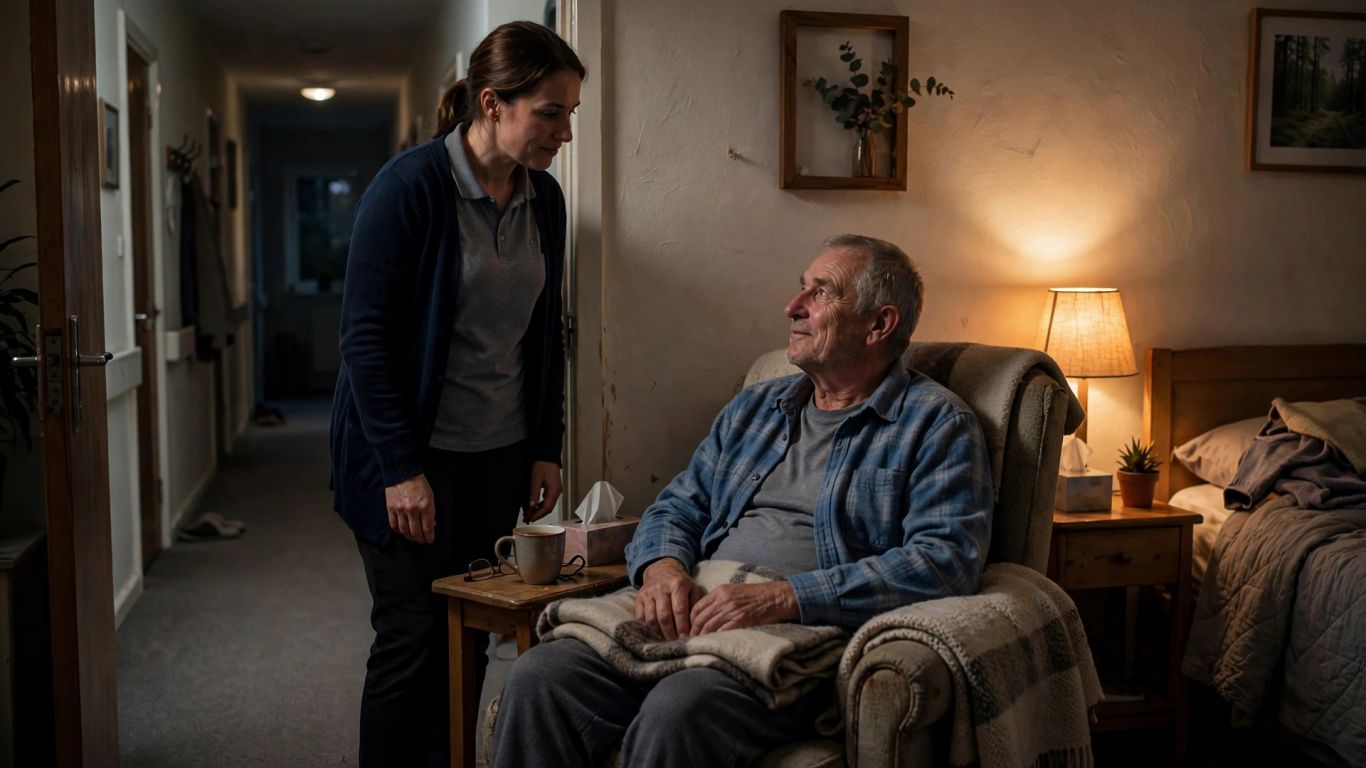
If someone regularly needs help with personal care, mobility, medication-related support or reassurance during the night, it may be difficult to rely on a worker who is asleep or elsewhere. We should consider how frequently these needs arise and whether delays would cause discomfort or create avoidable risk. The person’s own account of what helps them feel settled matters as much as the number of calls for assistance.
Risks linked to seizures, falls or other health conditions
Some health conditions can create risks that need a timely response, such as seizures, falls, breathing concerns or sudden changes in someone’s presentation. We should use relevant clinical advice and the person’s existing plans rather than assume that a diagnosis automatically means they need waking cover. The important point is whether a foreseeable event requires an awake worker to notice and act within a particular timeframe.
Distress, disorientation or behaviours that may require a response
Night-time waking can bring confusion, fear or distress, particularly when a person is in an unfamiliar or unsettled routine. A familiar, calm response may help someone feel safe and avoid escalation. We should understand what tends to precede distress, what communication works best, and whether staff presence overnight is likely to help rather than increase anxiety.
How disrupted sleep can affect the person or others
Poor or broken sleep can affect health, mood and daily routines, and repeated night-time activity may also disturb other people in a shared home. We should avoid treating quietness as the only goal: the person’s wellbeing and reasonable choices remain central. If disrupted sleep is persistent, it is worth discussing possible causes with the relevant health professionals before settling on a staffing response.
How to assess overnight support needs
A sound assessment starts with the person, not with a preferred staffing model. We can bring together what the person says, what is set out in their support plan, and what has actually happened overnight. The aim is to understand the level and timing of support needed, then consider the least restrictive safe way to provide it.
Review the person’s routines, preferences and support plan
We should look at usual sleep and waking times, routines that help the person settle, and any assistance they want or need during the night. Their support plan may already describe health needs, communication preferences or steps to take if they wake distressed. We should check that those arrangements reflect current wishes, rather than relying on old assumptions.
Record the frequency and nature of night-time incidents
A clear record helps distinguish an occasional event from a recurring need. Rather than noting only that someone was awake, we can record what happened, when help was needed, what response was given and whether it resolved the situation. A simple consistent record can make discussions more useful:
-
Time and duration of the incident
-
What support the person requested or appeared to need
-
The response provided and its outcome
-
Any follow-up required the next day
These details should be recorded respectfully and in line with applicable privacy and record-keeping practices. Over time, they can help us identify whether support needs are predictable, changing or linked to particular circumstances.
Consider whether risks can be managed without staff being awake
Not every overnight risk requires a waking worker. We can consider whether an agreed check-in, an environmental adjustment or another support arrangement would address the concern safely, while also being realistic about the consequences of a delayed response. Where uncertainty remains, we should seek appropriate professional advice and document why the chosen option is proportionate.
Involve the person, family and relevant professionals
The person should be involved in decisions about their home and night-time routine in a way that works for them. With their consent, family members or people who know them well may add useful context, while health and care professionals can advise on specific needs. We should make space for differing views and be clear about how the final decision was reached.
Waking night staff compared with other options
Waking night cover is one possible way to meet overnight needs, but it is not the only one. The right option depends on how quickly someone may need assistance, how often that is likely to happen and what the person finds acceptable. We can compare practical alternatives without assuming that technology or a less intensive arrangement will suit everyone.

When sleep-in support may be sufficient
Sleep-in support may suit a person who rarely needs help overnight and can safely wait for a worker to wake and respond. We should clarify what counts as an urgent call, how the worker will be alerted and what happens if the need occurs more than once. If frequent or time-critical assistance is needed, a sleep-in arrangement may not offer the required response.
Using assistive technology and agreed check-ins
Some people may benefit from an agreed check-in or assistive equipment, particularly when it supports independence without intrusive observation. We should establish what the equipment can and cannot do, who receives alerts and what response follows. Any arrangement needs the person’s informed agreement where possible and a backup plan for faults, missed alerts or changing needs.
Combining on-site staff with on-call support
In some settings, staff may be on site while additional support is available on call. This can work only if responsibilities, response times and escalation steps are clear, and if the arrangement matches the level of risk. In supported accommodation, HHS Group provides vetted Waking Night Support Workers for hostels, supported accommodation and emergency shelters, with training in safeguarding and conflict resolution. That service description is specific to those settings; it does not determine what an individual living arrangement requires.
Why remote monitoring may not suit every person
Remote monitoring can feel intrusive, may not identify every situation and may be unsuitable for someone who cannot easily use or understand the equipment. We should consider privacy, consent, communication needs and the likely response to an alert before relying on it. Technology can support a plan, but it should not be treated as a substitute for a person who needs immediate hands-on help.
Planning safe and person-centred night support
Once the level of support is agreed, the practical details matter. The person and staff need a shared understanding of what support is available, what should happen in an emergency and how personal choices will be respected. A clear plan can reduce uncertainty without turning the night into a sequence of unnecessary checks.
Agree staff responsibilities and escalation procedures
The plan should state who is responsible for routine assistance, what situations require escalation and whom staff should contact. We should include the steps to take if the person’s condition changes or a usual response does not work. Where a local provider is involved, HHS Group describes its Waking Night Support Workers as providing overnight welfare checks, safeguarding support and accurate handovers in Southampton and nearby areas.
Protect privacy, choice and independence overnight
Staff presence should not mean that the person loses privacy or control over their home. We can agree how staff announce themselves, which areas are private and when checks are appropriate. A useful principle is to provide the least intrusive support that still meets the person’s assessed needs.
Overnight support should offer help when it is needed, while leaving room for the person to rest and make choices.
This means avoiding checks simply because they are easy to schedule, unless there is a clear reason for them. We should revisit the approach with the person if it feels unsettling or no longer serves a practical purpose.
Make reasonable adjustments for communication and cultural needs
The plan should account for how the person communicates, any sensory needs, and preferences linked to culture, faith or personal routine. Staff may need to use particular words, visual prompts or a quieter approach when someone wakes. We should ask rather than assume, and record adjustments in a way that an incoming worker can understand.
Ensure staff have relevant training and handover information
Workers need relevant information about the person’s support plan, risks, communication preferences and escalation steps before they begin a shift. Handover should include changes that could affect the night, as well as any follow-up needed in the morning. We should keep instructions practical and current, and make sure staff know whom to contact if they are unsure.
Reviewing whether waking night support is still needed
Overnight needs can change as someone’s health, routines or circumstances change. A review helps us check whether the current arrangement is still proportionate and whether it continues to support the person’s wellbeing and independence. The decision should be based on evidence and the person’s views, not simply on the fact that a service has been in place for some time.
Set clear goals and review dates
At the outset, we can agree what the support is intended to achieve, such as a timely response to regular needs or improved confidence overnight. A review date makes sure that the arrangement is considered again rather than becoming automatic. Goals should be specific enough to discuss, but flexible enough to reflect the person’s experience.
Reassess after changes in health, sleep or circumstances
A change in health, medication, mobility, living arrangements or sleep pattern may affect the level of support required. We should reassess when a meaningful change occurs, rather than waiting for the next routine review. Where appropriate, relevant professionals can help us understand whether a change is temporary or likely to alter longer-term needs.
Use incident records and the person’s feedback
Records can show how often assistance has been needed and whether the current response has worked. They cannot explain by themselves how the person feels about staff presence, checks or interrupted sleep, so we should ask for their feedback in an accessible way. Considering both the practical record and the person’s experience gives us a fuller basis for review.
Adjust support gradually when needs change
If a reduction in waking support seems appropriate, we can plan a gradual change with safeguards and a clear route back to additional help if needed. Any trial should be discussed with the person and monitored carefully. Equally, if needs increase, we should update the plan promptly rather than waiting for a scheduled review.
Conclusion
Waking night staff may be needed when a person regularly requires timely help or faces risks that cannot be managed safely through other arrangements. By listening to the person, reviewing evidence and considering alternatives carefully, we can choose support that offers safety without unnecessarily limiting privacy, choice or independence.
Frequently Asked Questions
What is the difference between waking night and sleep-in support?
A waking night worker remains awake and available throughout the shift, while a sleep-in worker has a place to rest and responds when needed. The appropriate option depends on the frequency and urgency of overnight support needs.
Does needing support during the day mean someone needs waking night staff?
Not necessarily. We should assess overnight needs separately, including how often assistance is required, how quickly a response is needed and whether risks can be managed through another arrangement.
What information should be recorded about night-time incidents?
Useful records describe when an incident happened, what the person needed, what response was given and what the outcome was. They should be factual, respectful and handled in line with privacy and record-keeping practices.
Can assistive technology replace overnight staff?
Technology may help with agreed check-ins or alerts, but it may not be suitable for every person or every risk. We should confirm what it can do, who will respond and what backup is in place.
Who should be involved in assessing overnight support?
The person should be central to the assessment. With their agreement, family members and relevant health or care professionals can contribute information and advice about particular needs.
How often should waking night support be reviewed?
There is no single review interval that suits everyone. We should set a review date when support begins and reassess sooner if the person’s health, sleep, needs or circumstances change.
Can waking night support be reduced later?
It may be possible if the person’s needs change and a reassessment shows that another arrangement is safe and acceptable. Any reduction should be planned, discussed with the person and monitored so that support can be adjusted if needed.