0207 870 1221


Key Takeaways
Supporting a resident who has experienced a non-fatal overdose requires a calm, structured, and compassionate response that prioritises their emotional and physical well-being. By integrating trauma-informed care and harm reduction strategies, hostels can create a safer environment for recovery.
- Establish a structured, non-judgmental return pathway for all residents.
- Prioritise harm reduction tools like naloxone access and specialised staff training.
- Build strong, professional partnerships with external drug treatment services.
- Use restorative practices to manage conflict and maintain hostel stability.
- Provide ongoing emotional support for staff to prevent burnout and vicarious trauma.
Ensuring immediate safety upon re-entry
When a resident returns to the hostel, our primary focus is creating a safe, controlled environment that reduces the risk of further harm. We must manage this return with clear communication and a firm adherence to safety guidelines, ensuring the resident feels supported rather than penalised. Our staff prioritise consistent monitoring while respecting the individual’s dignity as they reintegrate into their living space.
Conducting a safe return interview
The return interview serves as the first step in re-establishing contact and assessing the resident’s current state of mind. During this conversation, we look for clarity, openness, and signs of distress, ensuring they feel secure enough to discuss their needs. By using restorative practice, we can frame this check-in as a supportive dialogue rather than a disciplinary encounter.
Assessing immediate risks and environmental triggers
Identifying what contributed to the overdose is essential to preventing future incidents within the hostel. We look closely at environmental factors, room conditions, and potential access to substances that might increase vulnerability. Understanding internal and external risks allows for a more tailored support plan moving forward.
Coordinating medication management and prescriptions
Managing health needs is a critical component of post-hospitalisation care. Following the guidance in our medication management guide, staff must clarify who oversees the resident’s medication and ensure clear documentation is maintained. We focus on assisting with prescriptions without overstepping our boundaries, always working in consultation with the resident’s healthcare providers.
Implementing room-check protocols without compromising dignity
Balancing safety with privacy is a delicate task that requires professional sensitivity. Our room checks focus on wellness oversight rather than policing, ensuring the environment remains a stable space for recovery. We maintain consistent night staff presence to ensure that welfare checks are performed regularly and safely during quieter hours.
Applying a trauma-informed approach to care
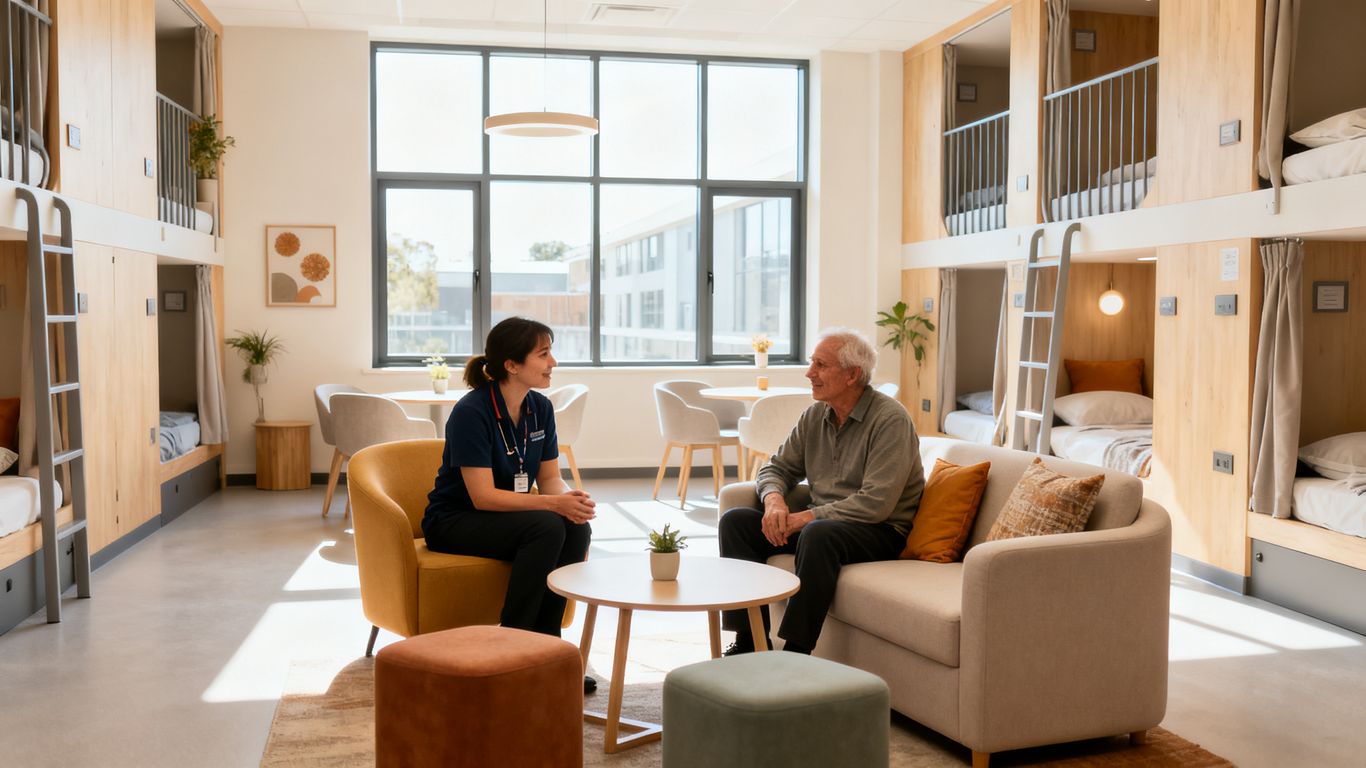
Recovery from a non-fatal overdose is a psychological process that requires extreme patience and empathy from our support team. We understand that residents often deal with hidden trauma, and our hostel environment must reflect this by remaining stable, predictable, and welcoming. By adopting trauma-informed principles, we create a space where healing is possible even amidst very difficult individual circumstances.
Recognising the psychological impact of a non-fatal overdose
Surviving an overdose can leave a resident feeling overwhelmed, shameful, or disconnected from their surroundings. We acknowledge that the emotional residue of such an event lasts far longer than the physical recovery, requiring our staff to remain vigilant about subtle changes in behaviour and mental health.
Fostering a non-judgmental restorative environment
Creating a psychologically informed environment is built on the foundation of radical acceptance and clear communication. We aim to remove the stigma often associated with drug use, ensuring that residents feel empowered to seek help before a crisis escalates. Our approach is entirely focused on the human behind the trauma.
Validating the resident’s feelings and experiences
Providing space for the resident to share their version of events is crucial for building trust. When we listen with genuine intent, we demonstrate that we value their perspective and are committed to their journey, which helps reduce the isolation that often accompanies substance misuse.
Avoiding re-traumatisation during daily interactions
Every interaction we have with a resident matters, from the way we knock on a door to how we address concerns about room cleanliness. We train our teams to use de-escalation techniques that avoid raising the tone or intensity of the situation, ensuring our daily rhythms protect the resident’s sense of safety.
Integrating harm reduction strategies within the hostel
Our hostels must act as a protective barrier against the volatility of drug use by providing accessible safety resources. We believe that pragmatic interventions, such as naloxone availability and harm reduction education, are lifelines for our residents. By lowering barriers to health information, we ensure residents are equipped with the knowledge they need to make safer choices.
Providing access to naloxone and staff training
Equipping every location with naloxone kits and ensuring staff can use them effectively is a non-negotiable standard. We believe that prompt, expert staff response saves lives in the critical moments following an overdose. Every team member undergoes mandatory training to ensure they are confident in these scenarios.
Establishing clear, proportionate reporting procedures
We maintain high standards for reporting incidents, which allows us to identify patterns and deploy help where it is needed most. This helps us ensure that our response is uniform across all shifts. Here are the core components of our safety infrastructure:
- Mandatory incident logging for all medical emergencies.
- Daily briefings to keep staff updated on risk levels.
- Regular review cycles to improve response speed.
- Clear escalation paths to senior management and external health teams.
Signposting to local needle exchanges and health services
Residents often need help navigating the complex landscape of health services. We act as an active link to local clinics and exchanges, providing the emotional and logistical support needed to reach these appointments. This coordination ensures that residents are not navigating their health journey alone.
Supporting residents after overdose homeless hostel guidelines
Implementing our internal guidelines for supporting residents after overdose homeless hostel requires continuous communication. We align our policies with emerging research on the overdose crisis, which also informs our broader strategies for managing resident occupancy and safety during vulnerable periods.
Collaborative working with external healthcare services

We cannot effectively support residents in isolation, which is why we prioritise strong, ongoing links with healthcare providers and addiction specialists. By working alongside external agencies, we create a wrap-around network of support that addresses both the physical and social determinants of health.
Communicating effectively with drug and alcohol treatment providers
Maintaining an open line with treatment providers ensures we can adjust our support based on the latest, most accurate health data. We treat these providers as extensions of our own team, ensuring that information flows freely to improve the outcomes for our residents.
Managing multi-agency information-sharing protocols
Establishing and respecting information-sharing agreements allows us to maintain resident privacy while ensuring that safety never falls through the cracks. We operate under strict data protection protocols, only sharing information that is absolutely necessary for the ongoing health and safety of the resident.
Facilitating access to specialist addiction support
We help residents access specialist programmes that may not be available within the hostel itself. Understanding the latest perspectives and recommendations from clinical journals allows us to guide our residents toward services that actually meet their specific needs, ensuring they receive the most relevant medical care possible.
Coordinating the transition from inpatient settings to residential life
Moving back to the hostel from a hospital stay is a high-risk transition that needs careful oversight. We follow strict protocols to manage this handover:
The transition phase is the most critical time for intervention, as residents are often disconnected from their usual support systems and highly vulnerable to environmental triggers that can lead to rapid relapse without intensive hostel support.
By managing this transition with empathy and structure, we reduce the likelihood of immediate re-entry into chaotic patterns.
Developing a personalised relapse prevention plan
Every resident’s path to recovery is unique, and our prevention plans must reflect their individual triggers and history. We focus on building a future-oriented roadmap that is both realistic and achievable, acknowledging that recovery is non-linear. The goal is to move beyond mere compliance toward genuine personal growth and stability.
Identifying individual triggers and high-risk periods
Working together, we document the specific situations, times of day, or social dynamics that test our residents’ resolve. By clearly identifying these risks, we can proactively adjust the level of support provided during critical hours, ensuring that staff are extra-vigilant when the risk is highest.
Building strong therapeutic relationships to encourage honesty
Honesty is the bedrock of any successful plan, and it only comes from a place of trust. We invest time in getting to know our residents, listening to their challenges without judgment. This rapport allows us to identify subtle, early warning signs of distress before they become emergencies.
Setting realistic and achievable recovery goals
We avoid the pitfalls of overly ambitious goals that set residents up for failure. Instead, we break down larger objectives into small, daily wins that foster confidence. This incremental approach makes the recovery journey seem manageable, even if it feels daunting at the start.
Establishing a clear procedure for when warning signs appear
Knowing exactly what to do when things go off-track provides security for both staff and residents. We define clear, objective markers that trigger a review of the support plan. This ensures that interventions are timely, measured, and always focused on returning the resident to a stable path.
Supporting staff through vicarious trauma and resilience
Doing this work takes an immense emotional toll, and we recognise that our staff need robust protection too. We advocate for a culture of transparency and mutual support where everyone feels safe to talk about their experiences. Resilience isn’t about being unaffected; it’s about having the right systems in place to recover and continue the work effectively.
Recognising the emotional toll of supporting overdose survivors
It is entirely normal for staff to feel shaken after emergency incidents. We look out for one another, keeping an eye on colleagues who might be struggling with sadness, fatigue, or irritability following these stressful events. Acknowledge that the impact is real and deserves serious professional attention.
Accessing regular clinical supervision and debriefing
Debriefing sessions offer a vital space for emotional offloading and learning from each situation. By accessing clinical oversight, staff can process their reactions in a professional, balanced way, which helps prevent long-term burnout and keeps the focus on providing high-quality care.
Maintaining professional boundaries while remaining compassionate
We aim to provide constant, warmth-based support while maintaining the healthy boundaries that keep our staff and residents safe. Training in how to handle these boundaries while demonstrating deep empathy is a cornerstone of our staff’s development, ensuring they can be present without absorbing the resident’s distress.
Ensuring adequate mental health first aid training
All team members are provided with comprehensive mental health resources as part of their induction and ongoing learning. We equate physical emergency skills with the ability to manage mental health crises, providing the necessary tools to navigate these situations with confidence and poise.
Conclusion
Supporting residents requires a balanced blend of clinical professionalism, genuine human compassion, and robust structural support, ensuring that every resident has a partner in their recovery. By integrating trauma awareness into daily operations, hostels can become resilient spaces that not only shelter but actively nurture recovery for the most vulnerable among us.
Frequently Asked Questions
What should I do first if I suspect a resident has overdosed?
If you believe someone is experiencing an overdose, call emergency services immediately, provide any known information about the substances involved, and administer naloxone if you are trained and equipped to do so safely.
How can I support a resident’s return to the hostel after a hospital stay?
Focus on creating a calm and welcoming environment, complete a thorough return interview to check their physical and emotional status, and ensure their medication management plan is reviewed and understood by both the resident and staff.
Are there specific ways to handle room checks that respect privacy?
Yes, conduct room checks with a focus on welfare rather than surveillance, always announce your presence clearly, and explain the restorative purpose of the check to ensure the resident understands you are there to keep them safe.
How do we help residents manage triggers without being intrusive?
Build a strong, trusting relationship where they feel comfortable discussing their triggers openly, then work together to identify small, practical adjustments in their daily routine that can reduce their exposure to high-risk situations.
Is it possible to maintain professional boundaries while being compassionate?
Absolutely, boundaries are a key part of compassion because they keep both the staff and the resident safe and prevent emotional burnout, allowing staff to offer a consistent, professional level of care for the long term.
Why is staff debriefing so important after an overdose incident?
Debriefing provides a structured space to process the intense emotions associated with emergency events, helping staff maintain their emotional health, prevent vicarious trauma, and reflect on the response to improve future performance.
What role do external healthcare providers play in hostel recovery plans?
They act as vital partners who provide the clinical expertise, diagnostic support, and ongoing treatment necessary to address the root causes of substance misuse, allowing hostels to provide a safer, more stable living environment.